Instructional Design Should Not Match Learning Styles
What if I told you individuals do not have a distinct approach to learning.
Throughout history, humans have thrived by mastering new skills, and we are constantly searching for the most effective ways to grow. Consequently, misconceptions about the learning process frequently arise. It is important to remember that just because a theory is widely accepted, it does not mean it is supported by scientific data. The purpose of this blog is to debunk the myth of "learning styles" and reveal what the science actually says about how people learn. Learning is not just a preference but it is fundamental to our daily lives and involves real cognitive change.
Background
My name is Jaime, and I am currently a master's student in the Learning Design and Technology program at the University of San Diego. I also work as a Program Coordinator at HeyTutor, where I oversee a team of tutors who support students across various subjects and grade levels. Working with students from kindergarten through eighth grade has given me a unique perspective on how learning myths shows across developmental stages. Younger learners are often labeled early on as "hands-on" or "visual" learners, and these labels can follow them for years, shaping not only how their tutors teach but also how the students perceive their own abilities. I have seen firsthand that when we focus on evidence-based strategies—like breaking down complex tasks into manageable steps, providing timely feedback, and building on prior knowledge—students at every grade level make meaningful progress, regardless of their supposed "learning style." This experience has reinforced my belief that effective instruction is not about matching preferences but about applying the science of how the brain actually learns.
What is Learning?
Learning is a continuous process, not a fixed product. It happens inside the mind and can only be observed indirectly through what a person produces or achieves. In simple words:
Learning = long-lasting changes inside your mind and behavior that slowly build up and change how you see everything and how you act.
According to Lovett et al. (2023), "Learning involves change in knowledge, beliefs, behaviors, or attitudes. This change unfolds over time; it is not fleeting but rather has a lasting impact on how students think and act" (p. 2).
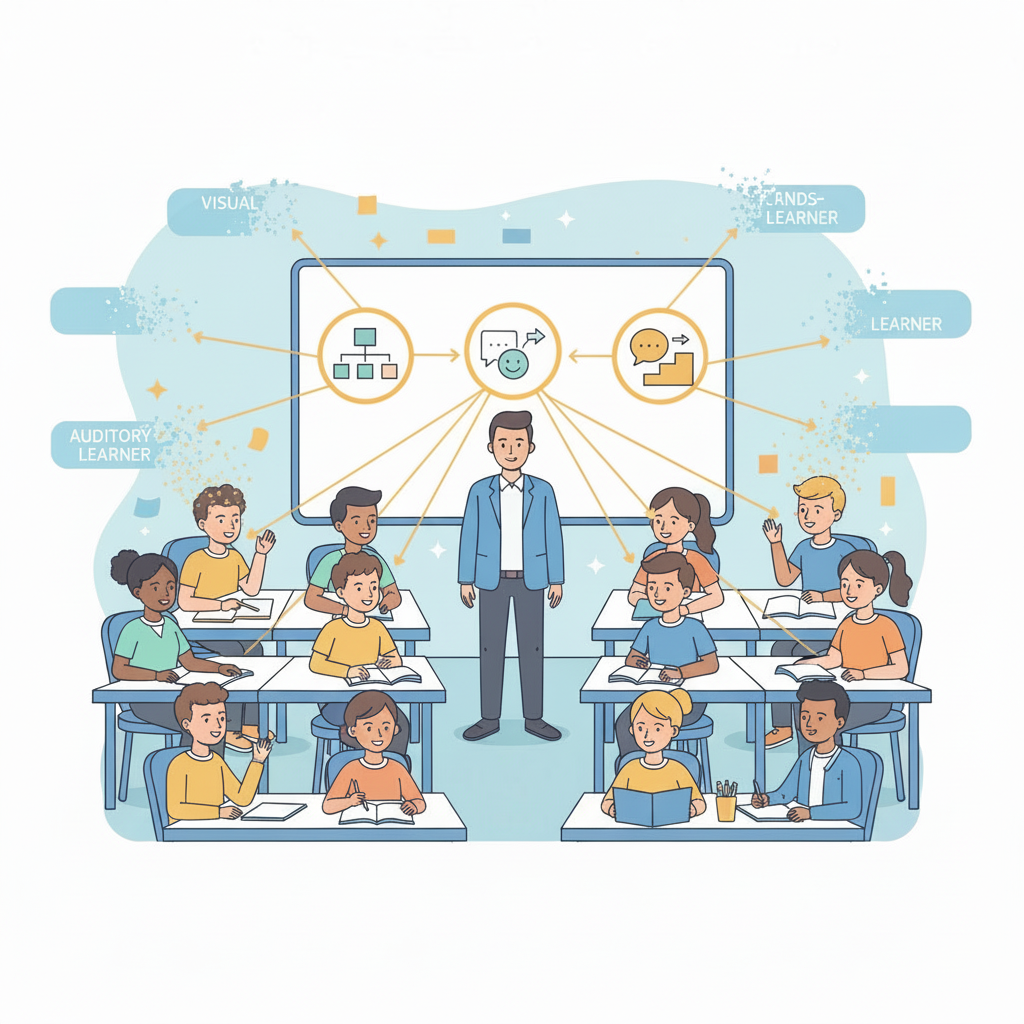
Debunking the Learning Styles Myth
A common idea in education is that everyone has a fixed "learning style"—like some people are visual learners, others learn best by listening, and some need to touch or move to really get it—and that teachers should adjust their lessons to match those styles. Even though this gets taught in a lot of teacher training programs and schools use it all over the world, there's actually no solid scientific evidence to back it up.
No Empirical Evidence Exists:
Kirshner and van Merriënboer (2013) reviewed decades of research and concluded that there is no empirical evidence demonstrating that learners perfrom better when instruction matches their preferred style. Let me give you an example an example. Imagine this: You’re in charge of a physical education class for a bunch of elementary or middle school kids. You hand out a survey and ask, “What activities do you want to do to get stronger, build stamina, and stay healthy?” A few kids might say running laps, push-ups, or drills. But most? They’d probably vote for dodgeball, tag, relay games with lots of sitting breaks, or even just hanging out on the playground with their phones or tablets during “active” time. Fun, low-effort stuff that feels good right now.
Now ask yourself: Would it be a good idea to build the entire PE program around whatever the majority says they like best? Let each kid mostly do only the activities they find fun and easy?
I think most of us — parents, coaches, teachers — would say no. Sure, the kids might show up happier and complain less at first. But over time, they wouldn’t develop the real fitness they need: strong hearts from steady cardio, muscle strength from progressive exercises, better coordination, and the toughness to push through hard moments. They’d be more likely to get hurt later because they skipped the basic conditioning. And when they face tougher challenges — like sports tryouts or just keeping up in life — they might feel frustrated or give up because they never built the foundation.
Here’s the connection I want to make: the same thing happens when we let students’ preferences completely drive how we teach academic subjects.
Kids (and adults too) often say they learn best in ways that feel comfortable and enjoyable in the moment — lots of videos, games, self-paced exploration, or choosing their own topics and speed. And just like preferring tag over running laps, those preferences usually come from wanting quick fun and avoiding hard work or frustration.
But decades of research in cognitive science show that deep, lasting learning often requires guided practice, structure, effort, and sometimes even a bit of struggle. Things like direct explanation from a teacher, focused practice, and building knowledge step by step work better than letting everyone follow only what feels good right now.
Just as a good PE teacher uses exercise science to design a program that actually makes kids fitter — even if it includes activities the kids didn’t vote for — good teaching should be grounded in what we know actually helps brains learn, not just in what students say they prefer.
Of course, we should listen to students and make learning engaging when we can. Enjoyment matters. But handing over full control based only on preferences is like letting kids eat candy for every meal because it’s what they want. It feels kind in the short term, but it doesn’t serve them well in the long run. Clark (1982, as cited in Kirschner & van Merriënboer, 2013) conducted a meta-analysis indicating that learners' preferences for particular instructional methods were typically uncorrelated or negatively correlated with learning outcomes.
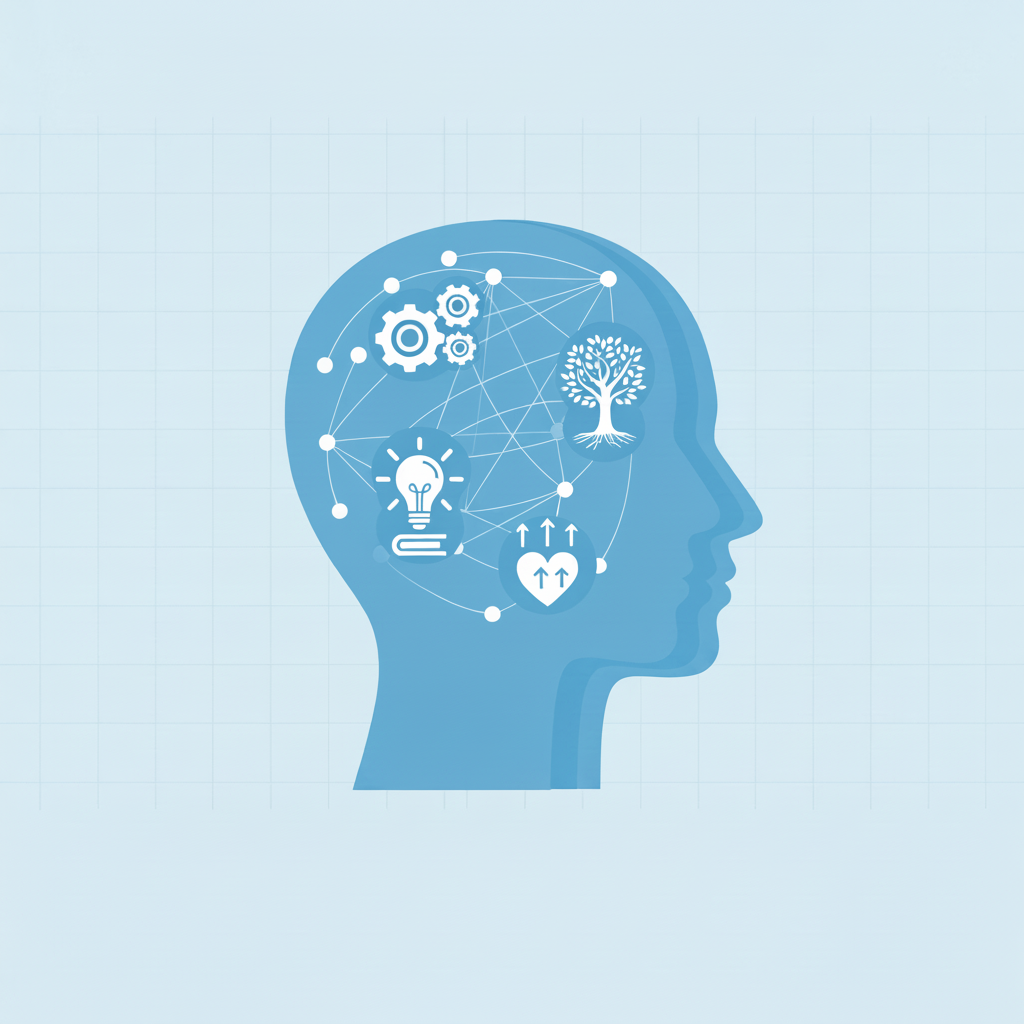
So, If Learning Styles Aren’t the Key to How People Learn… What Is?
Educational psychology gives us three big, well-researched frameworks that help make sense of it:
1. Behaviorism
This one focuses on observable actions and responses. The core idea is that learning happens when a behavior is followed by a consequence—usually a reward (positive reinforcement) or the removal of something unpleasant (negative reinforcement). Think of training a dog with treats, or a teacher giving praise or points for correct answers. Over time, the desired behavior becomes more likely.
2. Social Cognitive Theory
This theory says we learn a ton by watching other people—models—and then imitating what they do. But it’s not just mindless copying; we pay attention, remember what we saw, and decide whether we can (and want to) reproduce it. A huge part of this is self-efficacy: your belief that you’re capable of doing the thing. If you see someone like you succeed, you think, “Hey, I can do that too.” This explains why role models, demonstrations, and even YouTube tutorials are so powerful.
3. Sociocultural Theory
We learn through social interaction. We can accomplish anything with help. Group work, scaffolding, and discussions support this.
Principles for Effective Learning Design
Instead of structuring teaching around unsubstantiated ideas such as learning styles, educators should implement approaches supported by empirical evidence. Lovett and her co-authors present eight research-based principles that serve as a foundation for effective instructional and learning design.
Principle 1: Students differ from each other on multiple dimensions
Good teaching always starts with one simple question: Who are my students, really? Every person in the room brings a unique mix of identity, life experiences, and developmental stage. Those differences shape how they experience learning—ignore them, and you miss opportunities to reach everyone.
Principle 2: Students’ prior knowledge can help or hinder learning
What students already know is huge. If it’s accurate and you activate it at the right moment, it becomes a solid foundation for new material.
Principle 3: How students organize knowledge influences how they learn
When knowledge is structured accurately and meaningfully, students can retrieve and apply it effectively. Random or inaccurate connections lead to poor application.
Principle 4: Students' motivation determines, directs, and sustains what they do to learn.
When students find value in a task, expect success, and feel supported, they are strongly motivated to learn.
Principle 5: To develop mastery, students must acquire component skills, practice integrating them, and know when to apply what they have learned.
Mastery requires not just knowing individual skills but also practicing how to combine them and recognizing when to use them.
Principle 6: Goal-directed practice coupled with targeted feedback enhances the quality of students' learning.
Practice should focus on specific goals, target an appropriate challenge level, and occur frequently enough to build skill. Feedback must be timely, specific, and actionable.
Principle 7: The classroom environment can profoundly affect students' learning, positively or negatively.
The social and emotional dimensions of a classroom shape engagement, achievement, and persistence. A supportive environment encourages risk-taking and growth.
Principle 8: To become self-directed learners, students must learn to monitor and adjust their approaches to learning.
Self-directed learners assess their own understanding, identify gaps, and adjust their strategies accordingly.
References
Lovett, M. C., Bridges, M. W., DiPietro, M., Ambrose, S. A., & Norman, M. K. (2023). How learning works: Eight research-based principles for smart teaching (2nd ed.). Jossey-Bass.
Kirschner, P. A., & van Merriënboer, J. J. G. (2013). Do learners really know best? Urban legends in education. Educational Psychologist, 48(3), 169–183. https://doi.org/10.1080/00461520.2013.804395
